
HOME > OUR JOURNEYS > BROWSE BY CITY > MUMBAI
MUMBAI
Where Gothic Spires Meet Art Deco Curves
Architecture, art and heritage tours in Mumbai with WalkAroundIndia.
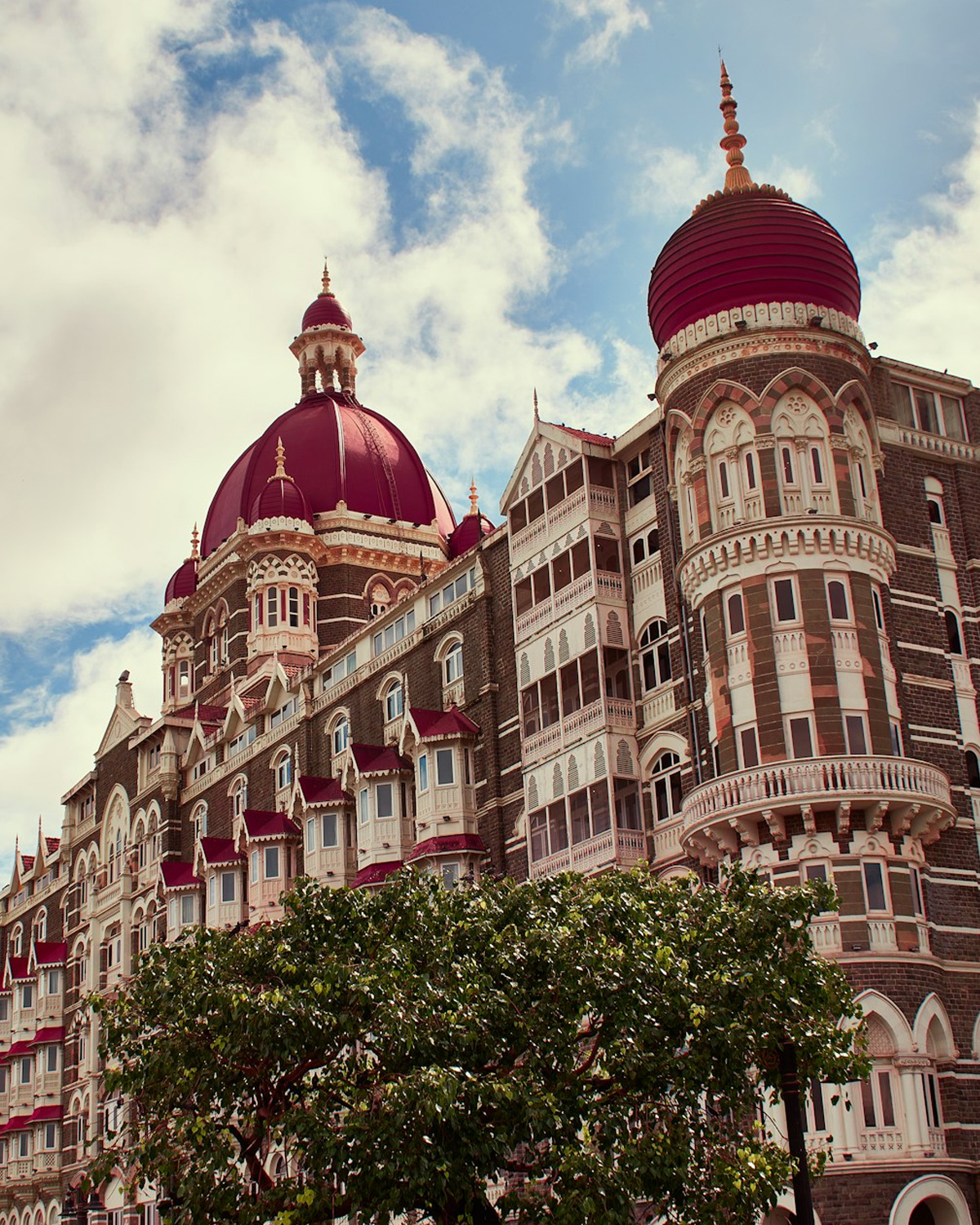
Mumbai is often celebrated for its energy, its cinema, and its relentless forward motion, but one of its greatest treasures lies quietly overhead — in an architectural heritage most visitors walk straight past. The city holds the world’s second-largest collection of Art Deco buildings after Miami, layered directly on top of some of the finest Victorian Gothic architecture built anywhere outside Britain. In 2018, UNESCO recognized this in a single inscription — the Victorian Gothic and Art Deco Ensemble of Mumbai — acknowledging what locals have always sensed: this is a city built in two great architectural waves, separated by only a few decades, and neither one has faded.
One of the most fascinating facts about Mumbai’s architecture is that its grandest Gothic building is also one of the busiest railway stations on Earth. Chhatrapati Shivaji Maharaj Terminus, designed by Frederick William Stevens and completed in 1888, was built to project imperial confidence through pointed arches, turrets, and stained glass — and yet it has never stopped doing its actual job. Millions of commuters pass beneath its vaulted ceilings every year, making it perhaps the only UNESCO World Heritage Site in the world that also runs a functioning suburban rail network.
Mumbai’s other great architectural landmark carries a stranger history still. The Chhatrapati Shivaji Maharaj Vastu Sangrahalaya was completed in 1914 as the Prince of Wales Museum — but it never opened its galleries first. World War I broke out, and the building spent its early years as a military hospital, treating wounded soldiers instead of housing artefacts. It briefly returned to hospital duty again during the 1918 influenza pandemic, and only opened to the public as a museum in 1922. Its central dome, borrowed in style from the Gol Gumbaz in Bijapur nearly 700 kilometers away, is a fitting symbol for a building that has always served more than one purpose.
By the 1930s, Mumbai’s architectural energy shifted decisively toward Art Deco. Along Marine Drive — the sweeping bay-front promenade locals call the Queen’s Necklace — apartment blocks and cinema halls rose in streamlined curves, geometric detailing, and nautical motifs, echoing a style rising simultaneously in Miami, Napier, and Shanghai. Unlike the stone-carved grandeur of Gothic Mumbai, this was architecture built for a modern, cosmopolitan, soon-to-be-independent city — sleek rather than ornamental, forward-looking rather than imperial.
Unlike Delhi’s red sandstone monuments or Jaipur’s pink-washed old city, Mumbai’s architectural identity is defined by contrast rather than consistency — grey stone Gothic revival standing directly beside pastel Art Deco curves, often on the very same street. This layering is, in many ways, the truest expression of the city itself: a place that has never chosen one identity when it could hold several at once.
Mumbai’s art history runs just as deep as its architecture, much of it concentrated in the same Kala Ghoda precinct as its Gothic and Art Deco landmarks. The Jehangir Art Gallery, founded in 1952 through a donation by Sir Cowasji Jehangir, became the nurturing ground for India’s post-independence art renaissance — exhibiting a young M.F. Husain, S.H. Raza, F.N. Souza, and Tyeb Mehta at a time when the Indian contemporary art movement was only just finding its voice. Every February, the same neighborhood transforms for the Kala Ghoda Arts Festival, nine days of street installations, craft stalls, live performances, and heritage walks that turn the entire district into an open-air celebration of art in all its forms.
Beyond the galleries, Mumbai is also where Maharashtra’s rural craft traditions meet an urban audience — Warli painting, with its distinctive white geometric figures on earthen backgrounds, and a wider marketplace of textiles and handicrafts drawn from across the state. And Mumbai is best understood through its markets and waterfront as much as its monuments: Crawford Market’s cast-iron colonial halls still trade exactly as they did over 150 years ago, while the Gateway of India stands as a final, grand piece of Indo-Saracenic architecture, built to commemorate a royal visit and now watching over the harbor as one of the city’s most photographed landmarks.
Ready to see Mumbai the way its architects — and its artists — intended? Book your Mumbai architecture, art & culture journey, or write to us at experience@walkaroundindia.com to start planning.