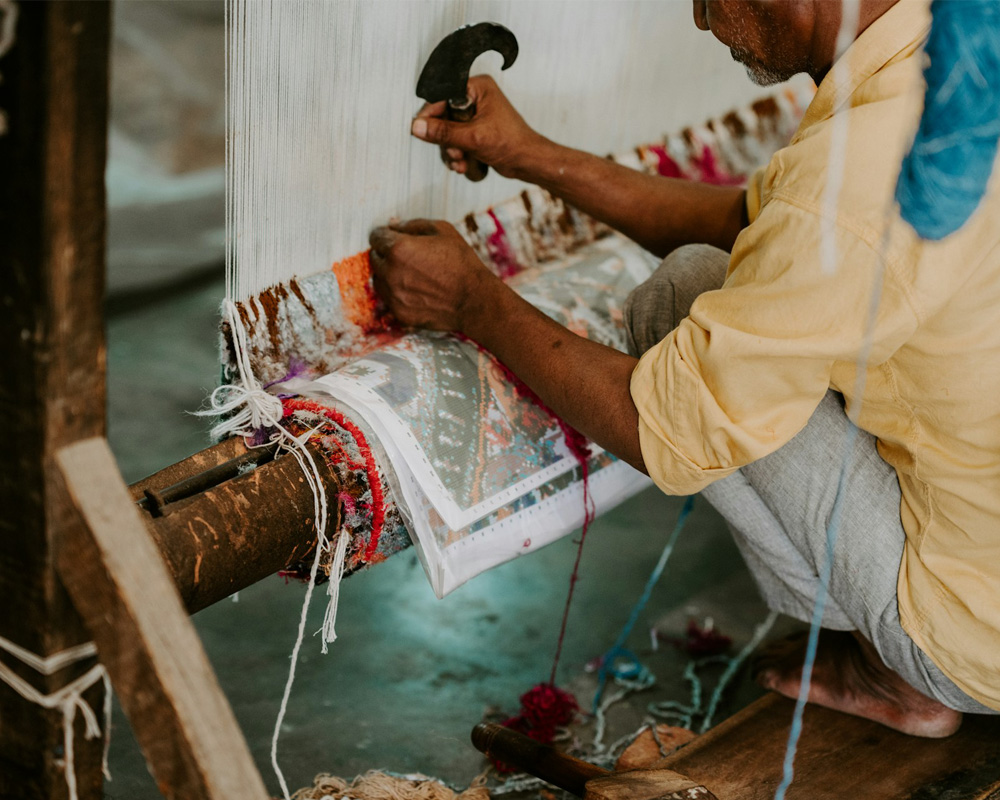
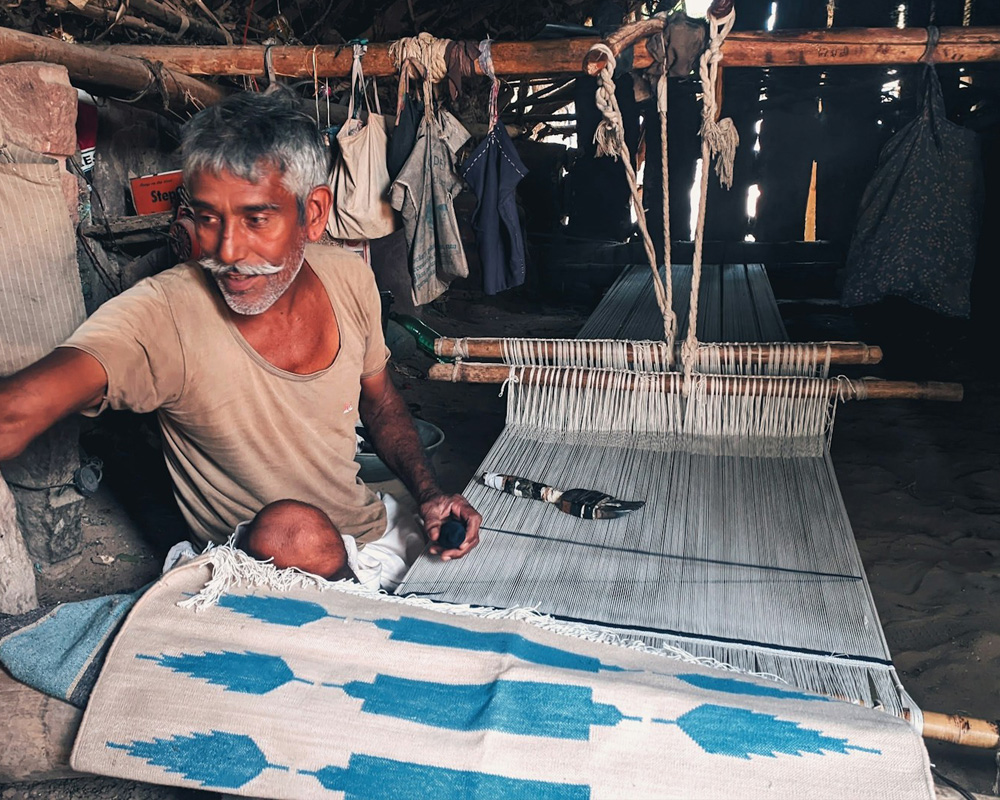
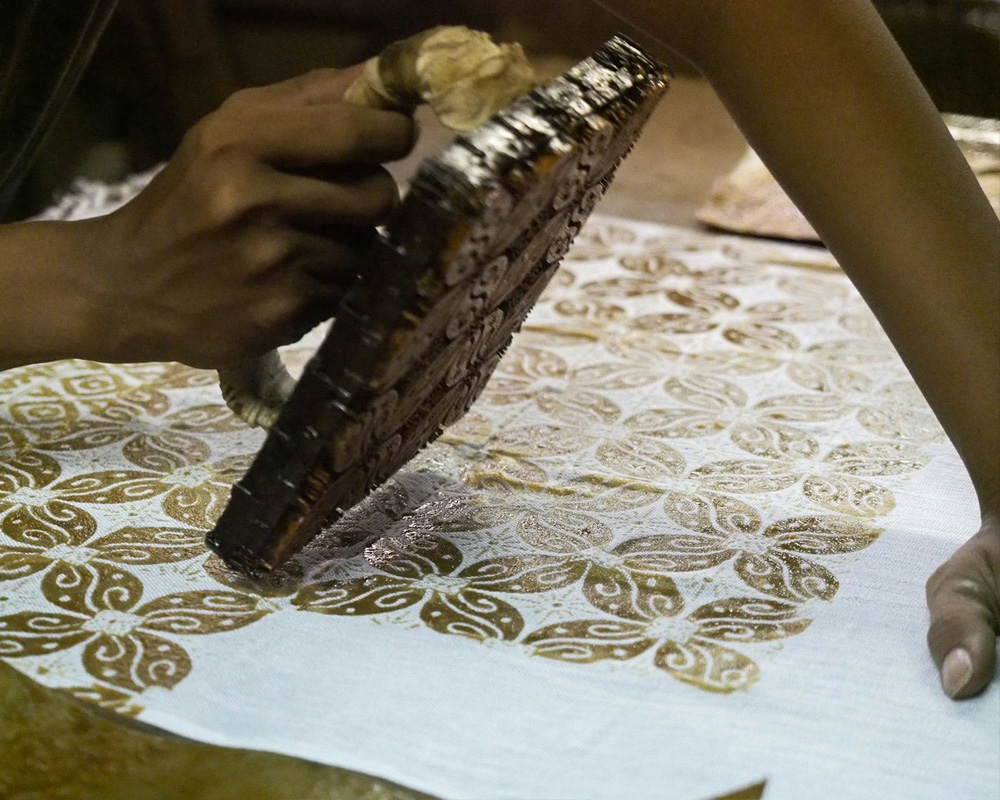
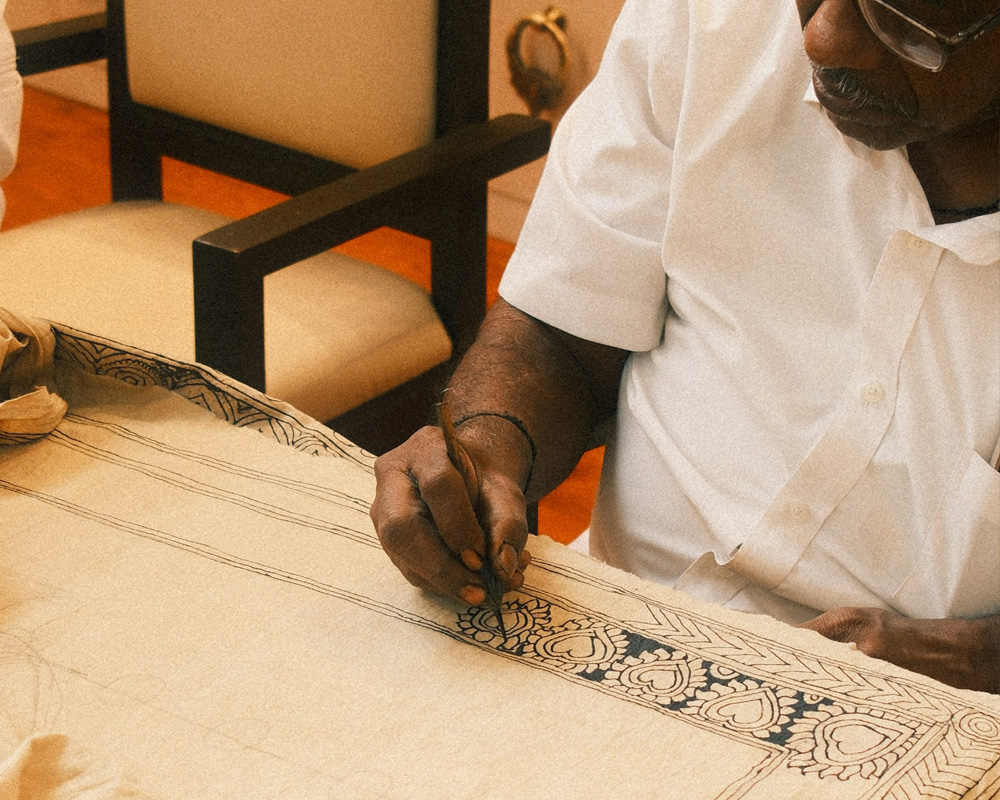
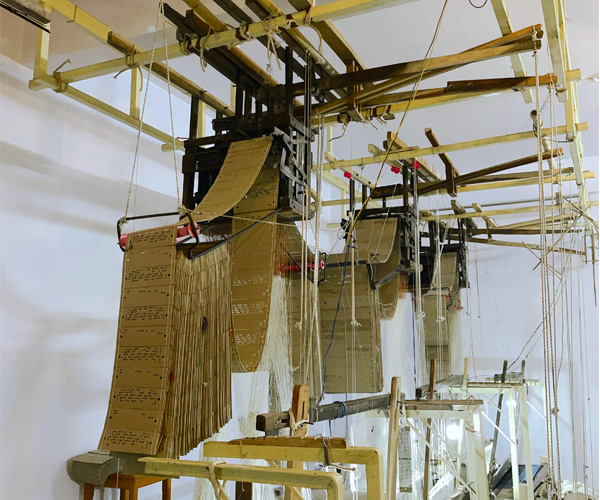
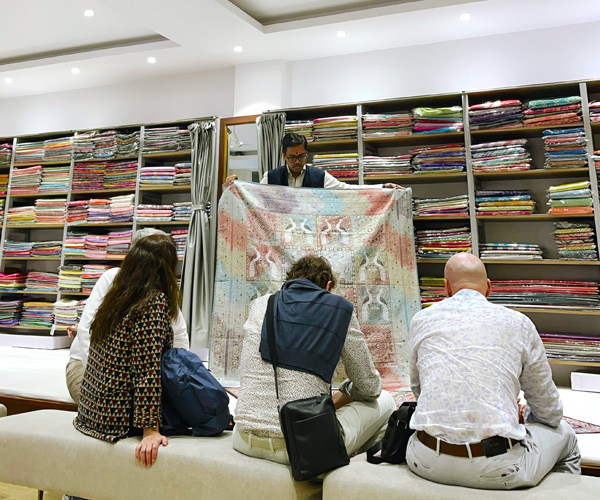
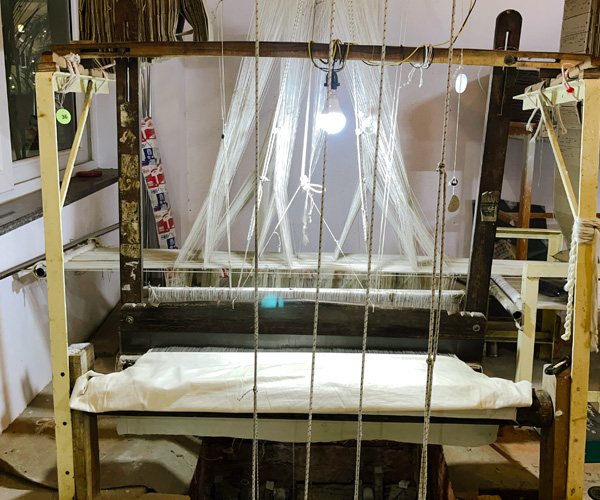
In Bagru and Sanganer, the focus turns directly towards the living traditions of block printing and textile production. Visits to workshops and interactions with artisans provide an opportunity to understand the complete process—from preparing fabrics and blocks to dyeing, printing and finishing. Rather than simply purchasing textiles, travellers learn about the knowledge, labour and community traditions behind them.
The journey continues to Udaipur, where craft traditions are experienced within a landscape of palaces, historic neighbourhoods, lakes and royal cultural heritage. Textiles, miniature painting, decorative arts and traditional craftsmanship reveal the close relationship between artistic production and the region’s cultural history.
In Ahmedabad, the journey explores India’s important textile legacy alongside its remarkable modern architectural heritage. The city provides an opportunity to understand how textile entrepreneurship, industrialisation, design education and modern architecture contributed to the development of contemporary India.
The final chapter takes travellers to Kutch, one of India’s richest regions for living craft traditions. Here, embroidery, weaving, dyeing, printing, leatherwork and other forms of craftsmanship remain closely connected to community identity and everyday life. Encounters with artisans and visits to craft communities provide a more intimate understanding of how traditional knowledge is preserved, adapted and passed between generations.
Throughout Threads of India, textiles are understood not simply as beautiful objects, but as expressions of place, identity, memory, skill and community. The journey connects workshops and craft communities with architecture, history, trade, design and contemporary creativity.
Threads of India offers travellers the opportunity to meet the makers, understand the process and experience the culture behind the craft—creating a journey that goes beyond shopping to explore India’s remarkable living artistic heritage.