
HOME > OUR JOURNEYS > BROWSE BY CITY > DELHI
DELHI
A city of Layers.
Delhi does not reveal itself all at once. It is a city that must be read slowly, one layer at a time. A monument may speak of imperial ambition, a narrow lane may preserve an older pattern of urban life, and a quiet garden may reveal how architecture, landscape and memory have shaped the city across centuries. In Delhi, history is not confined to museums or isolated monuments; it continues through streets, neighbourhoods, markets, courtyards and the everyday lives of its people.
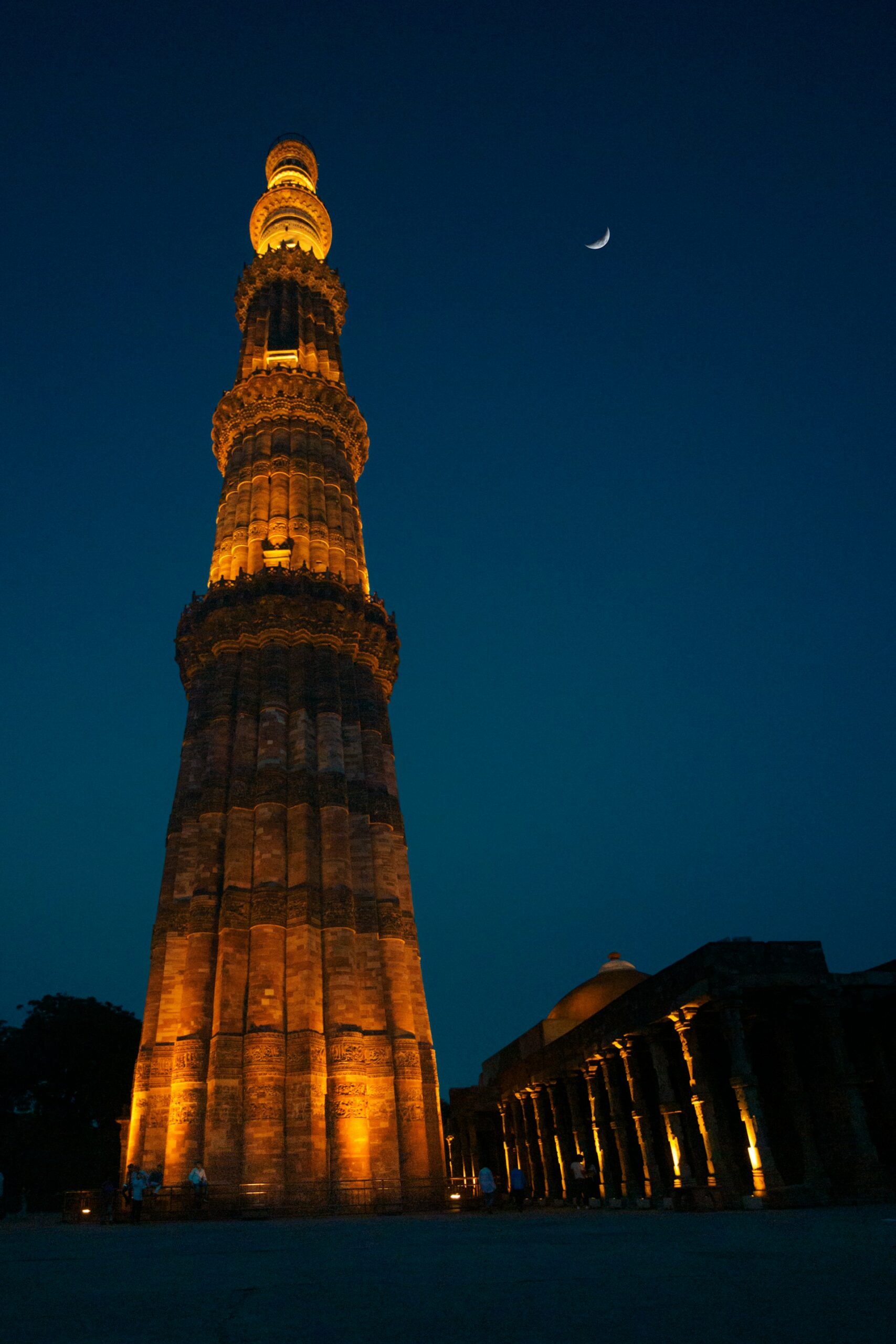
The story begins with the many historic settlements that once occupied this landscape. Over time, Delhi developed through successive centres of political and cultural power, each leaving behind its own architectural language. Mughal tombs, mosques, gateways, gardens and fortified structures demonstrate the relationship between architecture, authority, religion and landscape. Yet the city’s heritage is not only monumental. Its traditional neighbourhoods, havelis, bazaars and shaded courtyards reveal a more intimate form of architecture—one shaped by climate, community, craftsmanship and daily life.
The historic city invites us to look beyond individual buildings and understand how people have lived within them. Narrow streets create shade and movement; courtyards provide light, ventilation and privacy; markets connect trade with social life; and religious buildings continue to act as important centres of community. These spaces offer a different understanding of architecture—one that is not simply about appearance, but about how buildings support relationships, rituals and ways of living.
Delhi’s architectural story changes again with the development of New Delhi, planned during the colonial period. Its broad avenues, axial planning, formal gardens, monumental buildings and carefully composed vistas express a very different vision of the city. The architecture of Lutyens’ Delhi combines imperial planning with Indian materials, craftsmanship and climatic responses, creating a landscape that remains central to the identity of the capital.
The city’s architectural journey does not end with the colonial period. After independence, Delhi became a place where architects and planners explored new ideas of nation-building, public institutions, housing and modern urban life. Post-independence and contemporary buildings introduced new materials, structural forms and spatial ideas, while continuing to negotiate the complexities of an Indian city. The result is a layered urban landscape in which historic traditions, colonial planning, modern architecture and everyday adaptation exist together.
A journey through Delhi with WalkAroundIndia is therefore not simply a tour of famous monuments. It is an exploration of how the city was built, how it changed, and how its people continue to inhabit and reinterpret it. Through architecture walks, historic neighbourhoods, gardens, markets and cultural encounters, we look at Delhi as both a repository of history and a living, evolving city.
Delhi rewards curiosity. Its most meaningful stories are often found not only in its grand monuments, but also in the relationship between a building and its street, a courtyard and its community, a market and its traditions, or a historic landscape and the contemporary city around it.
To experience Delhi is to move through its layers—and to understand how history, architecture and everyday life continue to shape one another.