
Why meaningful travel begins when we stop collecting places and start understanding them.
There is a familiar way of travelling through India.
We arrive in Delhi, visit the Red Fort and Qutub Minar, take photographs at India Gate, and move on to Agra. The Taj Mahal is next, followed by Jaipur, perhaps Varanasi, and then another destination. We collect photographs, tick off monuments, buy souvenirs and return home with a camera full of memories.
We have seen a great deal of India.
But how much of it have we really understood?
This is a question I often return to when thinking about how we design journeys through India. With its extraordinary architecture, diverse communities, living traditions, crafts, landscapes and histories, India offers far more than can be captured through a list of attractions.
And perhaps the most interesting experiences begin when we stop asking, What should I see next? and start asking, What can I understand here?
At WalkAroundIndia, this is the difference between consuming a destination and engaging with its culture.
What Does It Mean to Consume a Destination?
Tourism often encourages us to think of destinations as collections of attractions.
A city has its famous monuments. A region has its signature food. A village has its handicrafts. A cultural performance becomes something to watch, and a local market becomes somewhere to shop.
There is nothing wrong with visiting monuments, tasting regional food, watching performances or buying crafts. These experiences can be wonderful.
The problem begins when they become the entire purpose of travel.
When we move too quickly from one attraction to another, places can become interchangeable. We photograph a beautiful building without understanding why it was constructed. We admire a textile without knowing who made it. We visit a village without learning anything about the people who live there.
The destination becomes a product to be consumed rather than a place to be understood.
This is particularly relevant in India, where the visible attraction is often only the beginning of a much larger story.
A haveli in Rajasthan is not simply an architectural object. It can reveal something about family structures, trade, climate, materials, social life and the aspirations of the people who built it.
A traditional market is not merely a colourful backdrop for photographs. It is a place where livelihoods, relationships, negotiation, food, craft and everyday life come together.
A temple is not only a remarkable structure. It may also be part of a living world of ritual, music, festivals, craftsmanship and community.
To travel meaningfully, we need to look beyond the attraction and become curious about the world that created it.
Architecture Is a Good Place to Begin
As someone who works with art, architecture and cultural travel, I often feel that buildings can teach us how to read a destination.
Consider the old neighbourhoods of Ahmedabad.
You can admire the intricately carved wooden façades, photograph the narrow lanes and visit the city’s celebrated monuments. But if you look a little closer, the architecture begins to tell you more.
Why are the houses arranged around shared spaces? How do the buildings respond to the climate? What do their courtyards, entrances and carved details reveal about privacy, community and craftsmanship? How do people continue to use these historic spaces today?
Suddenly, architecture is no longer just something to look at. It becomes a way of understanding how people have lived and continue to live.
The same approach changes how we experience Chandigarh. The city offers an opportunity to explore modernist architecture, urban planning and the ambitions of a newly independent India. Understanding the ideas behind its design makes the experience richer than simply photographing its buildings.
In Varanasi, architecture takes us into another world altogether. The ghats are extraordinary, but the city cannot be understood from the riverfront alone. Its lanes, shrines, homes, workshops, markets and everyday rituals reveal a more complex relationship between faith, place and daily life.
This is what cultural engagement can do. It turns sightseeing into interpretation.
Meet the People Behind the Place
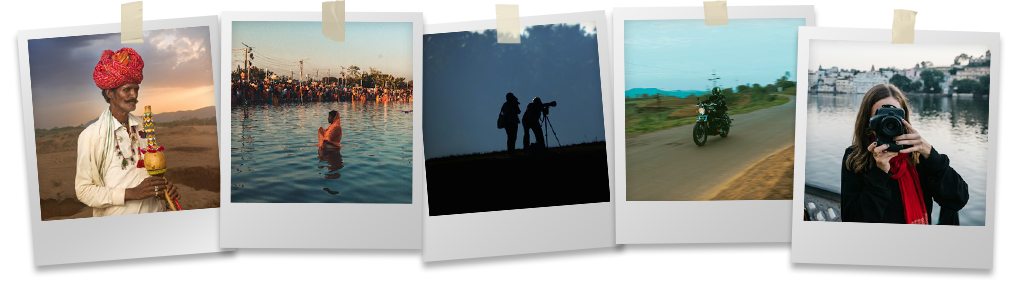
A destination is never only its buildings, monuments or landscapes. It is also the people who give those places meaning.
This is why I believe that meeting local people is one of the most valuable parts of a thoughtfully designed journey.
Imagine visiting a textile workshop in Rajasthan.
You could purchase a beautiful block-printed fabric from a shop and take it home. Alternatively, you could spend time with a craft practitioner, learn how the wooden blocks are carved, understand how colours and patterns are developed, and observe how the printing process depends on skill, rhythm and experience.
The fabric you take home may be the same. Your relationship with it will not be.
You will know something about the hands that made it, the knowledge behind the process and the challenges involved in sustaining the craft.
The same is true of a Banarasi sari, a Kullu shawl, a piece of traditional metalwork or a hand-carved architectural detail.
These objects are not simply souvenirs. They carry knowledge, labour, memory and identity.
For this reason, we try to think carefully about the people we introduce to our travellers. We look for opportunities to meet artisans, craftspeople, local experts and community members who are willing to share their knowledge and experiences.
The aim is not to turn people’s lives into tourist performances. It is to create respectful opportunities for exchange, learning and appreciation.
A meaningful encounter should leave both the traveller and the host feeling that the interaction was worthwhile.
Travel More Slowly, Even When Time Is Limited
Meaningful travel does not necessarily require a month-long holiday. Nor does it mean that travellers must avoid famous monuments or visit only remote destinations.
It requires a different approach to time.
A carefully planned five-day journey can be more rewarding than a hurried two-week itinerary if the experiences have been selected with intention.
Instead of visiting six monuments in a single day, perhaps we spend more time understanding two of them. Instead of treating lunch as a quick stop between attractions, we explore regional food and the stories behind it. Instead of driving through a historic neighbourhood without stopping, we walk through it with someone who understands its architectural and social history.
Sometimes, the most memorable moment is not listed in the itinerary.
It might be a conversation with an artisan, an unexpected architectural detail, a meal in a neighbourhood restaurant, or a story shared by a local guide that changes how you see a place.
Slower travel is not simply about doing less. It is about making room for experiences that cannot be rushed.
Cultural Engagement Must Be Respectful
There is an important distinction between cultural engagement and simply adding more activities to an itinerary.
A private home visit, a village walk, an artisan workshop or a religious ceremony does not automatically become meaningful because it is described as an authentic experience.
The way it is organised matters.
Are local people comfortable with the visit? Is their time respected? Are photographs appropriate? Does the interaction provide value to the host, or does it serve only the visitor? Are we explaining a living culture with sensitivity, rather than presenting it as something frozen in the past?
These questions matter because communities are not attractions. They have their own priorities, beliefs, routines and boundaries.
Responsible cultural travel begins with listening. It involves working with people rather than treating them as additions to a tourist programme.
At WalkAroundIndia, we believe that good journeys depend on relationships. This is why we spend time connecting with local experts, artisans, craftspeople and carefully selected accommodation partners when developing our itineraries.
We cannot promise that every encounter will be transformative. What we can do is create the conditions for more thoughtful, informed and respectful experiences.
The Luxury of Understanding
Luxury travel is often associated with beautiful hotels, private transport, exclusive access and exceptional service. These things can certainly make a journey more comfortable.
But I believe there is another kind of luxury: the opportunity to understand a place deeply.
It is the freedom to spend time with an expert who can explain the architecture you are looking at. It is having someone who knows the neighbourhood well enough to take you beyond the obvious route. It is meeting a craft practitioner whose knowledge gives you a new appreciation of an object. It is being able to ask questions, change direction and follow an interest without feeling rushed.
For travellers who are curious about art, architecture, history and culture, these experiences can be more valuable than another attraction added to an already full itinerary.
This is particularly true for travellers returning to India for a second or third visit. They may have already seen the Taj Mahal, explored Jaipur and experienced Varanasi. Their next journey can take them deeper into the places they know, or introduce them to destinations they might otherwise overlook.
The objective changes from seeing more to understanding more.
And that, to me, is a more compelling definition of luxury.
How Can You Travel India More Meaningfully?
You do not need to change everything about the way you travel. A few simple questions can make a significant difference.
Look beyond the famous attraction. Ask what else is happening in the neighbourhood around a monument. Walk its lanes, notice its buildings and observe how people use the space.
Choose guides who interpret, not just inform. Dates and names are useful, but a good guide helps connect architecture, history, society and everyday life.
Make room for local knowledge. Meet craftspeople, explore regional food, visit working neighbourhoods and learn from people who know the destination intimately.
Ask questions. Why was this building designed this way? How has this tradition changed? What materials are used? What challenges do local artisans face today?
Respect local boundaries. Ask before photographing people, be mindful when visiting religious spaces, and remember that everyday life does not exist solely for visitors.
Leave some space in your itinerary. Not every hour needs to be planned. Some of the most interesting discoveries happen when there is time to pause, talk and look more closely.
Most importantly, do not measure the success of a journey only by the number of places visited.
Ask yourself what you learned, which conversations stayed with you, and whether your understanding of the destination changed.
A Different Way to Experience India with WalkAroundIndia
India is not a destination that can be understood through a single journey. Its architectural traditions, artistic expressions, regional identities and living cultures are too diverse for that.
But a thoughtfully designed journey can open a door.
At WalkAroundIndia, we create private, bespoke journeys for travellers who want to explore India through its art, architecture, heritage, crafts, food and lived culture.
Our approach brings together destination expertise, specialist interpretation, local relationships and carefully considered experiences. We work with travellers, architects, designers, cultural groups and international travel partners to create journeys shaped around genuine interests rather than a standard checklist.
We believe in visiting places with curiosity, meeting people with respect and allowing the stories of a destination to emerge through its buildings, objects, landscapes and everyday life.
Because India offers much more than monuments to photograph or attractions to collect.
It offers ideas to explore, traditions to understand, people to learn from and stories that become richer the longer we pay attention.
The next time you travel, do not ask only how much you can see. Ask how much you can understand.
That is where the journey begins to mean something different.
WalkAroundIndia
India, read through its art, architecture and lived culture.
Planning a meaningful journey through India? Get in touch with WalkAroundIndia to begin designing your own cultural journey.
Email: experience@walkaroundindia.com
