
A monument can sometimes tell you more about society than about architecture.
When people talk about Lucknow, they often talk about its elegance.
The Nawabs.
The food.
The poetry.
The tehzeeb.
The extraordinary architecture.
And then there is Bara Imambara.
For many visitors, it is one of those places that immediately creates a sense of wonder.
You walk through the gateway.
The scale changes.
The building opens up.
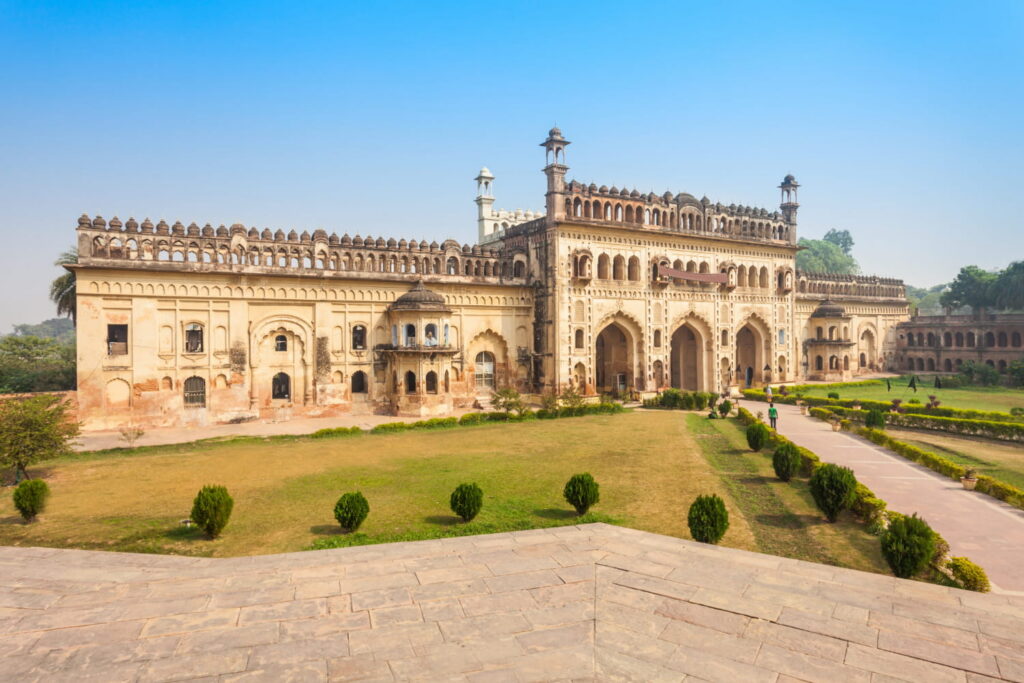
You see the great central hall, the mosque, the surrounding courtyards and, of course, the famous Bhul Bhulaiya.
But there is a story behind this building that I think changes the way you experience it.
Bara Imambara was built during a devastating famine.
In 1784, Nawab Asaf-ud-Daula initiated the project as a famine-relief measure. Construction continued for several years, eventually producing one of Lucknow’s most extraordinary architectural landmarks. The Government of Uttar Pradesh records the construction period as 1784–1791 and explicitly describes it as a famine-relief initiative.
Think about that for a moment.
A monumental building that we now visit as tourists was, in its own time, connected to a very practical human problem:
How do you provide work and support to people during a crisis?
That makes the building feel very different to me.
It is no longer simply an impressive example of architecture.
It becomes a story about patronage.
About employment.
About dignity.
About the relationship between a ruler and his people.
And about how architecture can sometimes become an instrument of social policy.
Architecture with a social purpose
The story becomes even more interesting when you learn about how the construction was organised.
According to the Lucknow district administration, the Nawab invited architects to compete for the design, with Kifayatullah’s proposal eventually selected. The account also records an unusual arrangement intended to allow members of noble families to participate in the construction without compromising their social dignity: they were reportedly paid at night.
Whether you are interested in architecture, history or society, there is something to learn here.
Architecture is never only about walls.
It is also about who commissions it, who builds it, who uses it and why it is created in the first place.
And this is precisely why I love travelling through Lucknow.
I don’t want guests to move from Bara Imambara to Rumi Darwaza, take a photograph and get back into the car.
I want to slow down.
Look at the proportions.
Understand the materials.
Notice how the architecture creates movement.
Talk about the Nawabi period.
Then move beyond the monuments and experience the city itself.
Because Lucknow’s greatest heritage isn’t contained inside one building.
It is in its language.
Its food.
Its hospitality.
Its craft.
Its music.
Its old neighbourhoods.
Its architectural vocabulary.
Its culture of conversation.
Why I would take you to Lucknow
For me, the best journeys are the ones where a building becomes the beginning of a conversation.
Bara Imambara can lead us to famine and patronage.
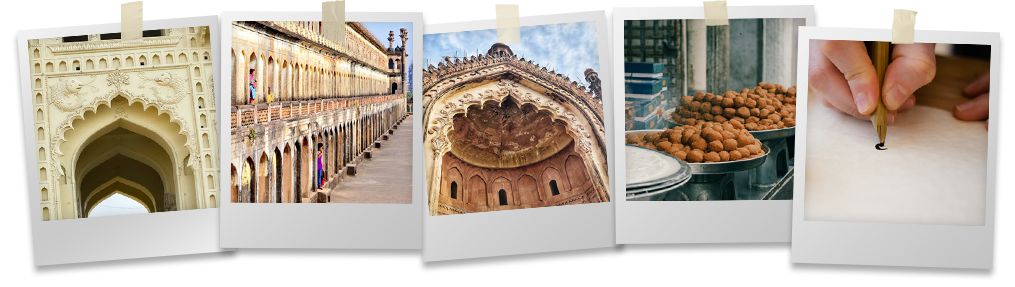
Rumi Darwaza can lead us to the ambitions of the Nawabs.
The old city can lead us to everyday life.
Food can lead us into history.
And a conversation with a local can sometimes reveal something that no guidebook contains.
That is why I don’t want you to simply see Lucknow.
I want you to understand a little of the world that created it.
Because once you know the story, you never look at the monument in quite the same way again.
