

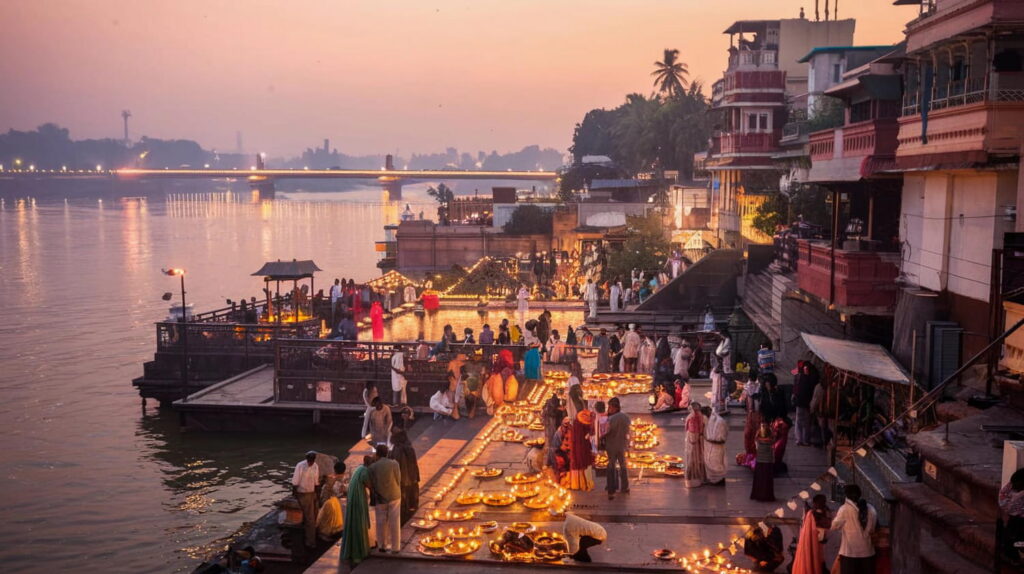
The river is where many travellers begin. But it is not where the story ends.
If you ask someone to describe Varanasi, there is a good chance they will immediately mention the Ganges.
The ghats.
The boats at sunrise.
The evening Ganga Aarti.
The lamps floating on the river.
The extraordinary atmosphere.
And they are not wrong.
The ghats are fundamental to understanding Varanasi.
But after spending time in this city, I have become increasingly convinced that:
You cannot understand Varanasi from the ghats alone.
To understand the city, you have to turn around.
Away from the river.
And walk into the lanes.
The city behind the river
Varanasi’s famous galis form a dense network of winding passages filled with homes, shrines, shops, food stalls, workshops and everyday activity. Incredible India describes these lanes as the city’s “heartbeat,” noting the hidden shrines, historic homes, markets, food and encounters with craftspeople and musicians.
And this is where Varanasi becomes fascinating.
You may walk past a tiny shrine without even realising its significance.
You might hear the sound of a loom before you see the workshop.
You may suddenly smell freshly prepared kachori.
A musician might be practising somewhere behind a doorway.
Someone may be making garlands.
A family may be preparing for a ceremony.
A silk weaver may be working on a sari that will eventually travel halfway around the world.
Nothing is arranged for the visitor.
That is precisely why it is interesting.
Varanasi is not a museum
One of the things I love about Varanasi is that it refuses to behave like a museum.
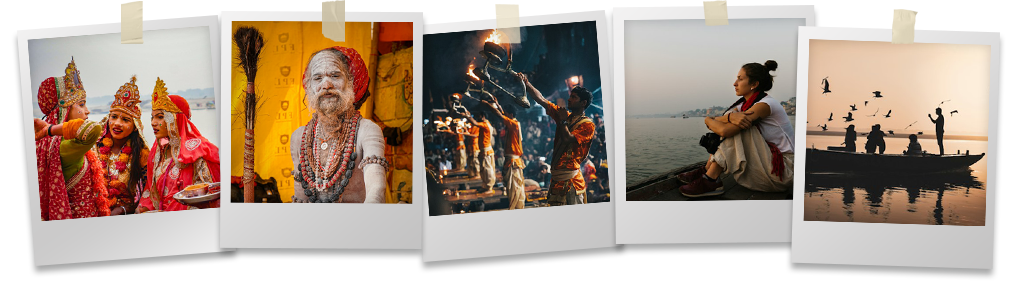
The city is old, but it is not frozen.
People live here.
Work here.
Pray here.
Make things here.
Celebrate here.
Eat here.
Argue here.
Raise families here.
And continue traditions here.
Varanasi is also recognised by UNESCO as a Creative City of Music, reflecting the city’s deep musical traditions and its association with artists such as Bismillah Khan, Girija Devi and Ravi Shankar.
So when we design a Varanasi journey, I don’t want every day to be about monuments.
I want there to be time for the city itself.
One morning I might take you to the river.
Another morning, perhaps, we walk through the lanes.
We might visit a silk workshop.
We might stop for something local to eat.
We might meet someone who has spent decades practising a craft.
We might discuss architecture.
We might talk about death and spirituality.
We might sit quietly.
And sometimes, the best experience is simply getting lost in a conversation.
This is why I tell guests:
Don’t come to Varanasi only to photograph the Ganges.
Come to understand the relationship between the river and the city.
The sacred and the everyday.
The monumental and the intimate.
The ancient and the constantly changing.
Because the ghats show you one face of Varanasi.
The lanes introduce you to another.
And somewhere between the two, the city begins to make sense.
