
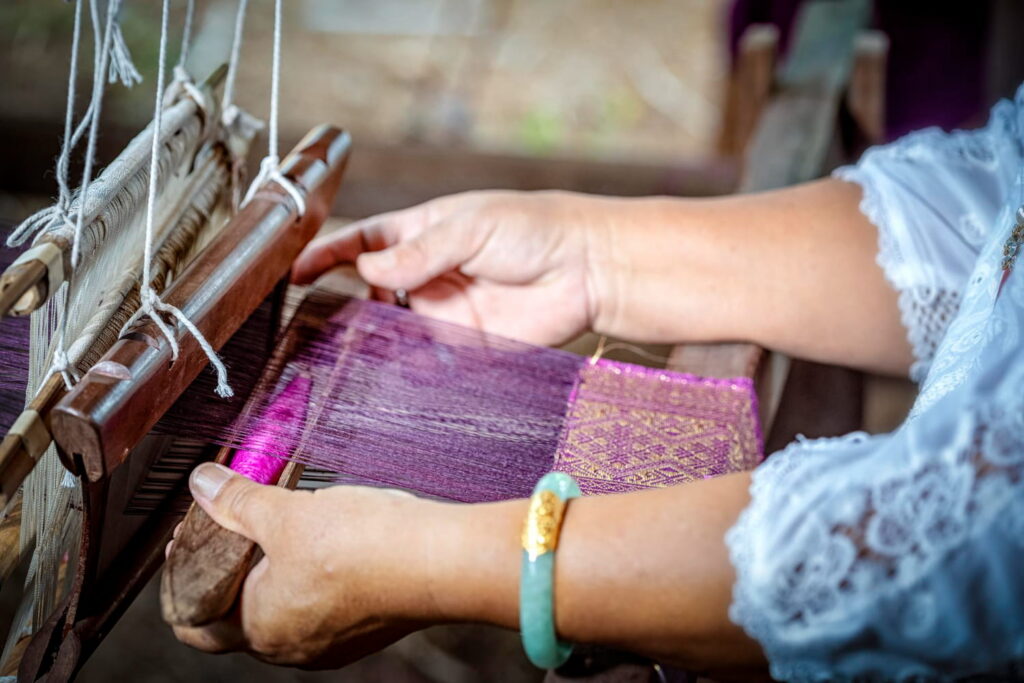
Before it becomes a beautiful sari, it is a very long conversation between silk, design, technique and human hands.
There is something almost magical about seeing a Banarasi sari in a shop.
The silk catches the light.
The zari glows.
The motifs seem impossibly detailed.
You look at it and immediately understand why people fall in love with Banaras textiles.
But when I visit weaving communities, I find myself looking at something different.
Not just the sari.
The hands behind it.
Banaras brocade and silk weaving is a highly skilled craft tradition. The Varanasi district administration identifies Banaras Brocades and Sarees as a registered Geographical Indication product, describing the use of finely woven silk, zari and intricate motifs.
The Ministry of Textiles’ India Handloom Brand describes the use of mulberry silk, zari and traditional Banaras handloom techniques, including jacquard mechanisms and specialised attachments used to create motifs.
But honestly, technical descriptions don’t fully explain what it feels like to sit beside a weaver.
Imagine making something you cannot rush
Before the weaving begins, there is preparation.
The silk has to be selected.
The yarn prepared and dyed.
The design planned.
The loom arranged.
The warp and weft brought together.
Then the weaving begins.
And the motifs that look effortless to us require extraordinary precision.
A floral pattern.
A border.
A jaal.
A delicate metallic detail.
Every part has to be controlled.
The weaver is not simply making fabric.
They are translating a design into structure.
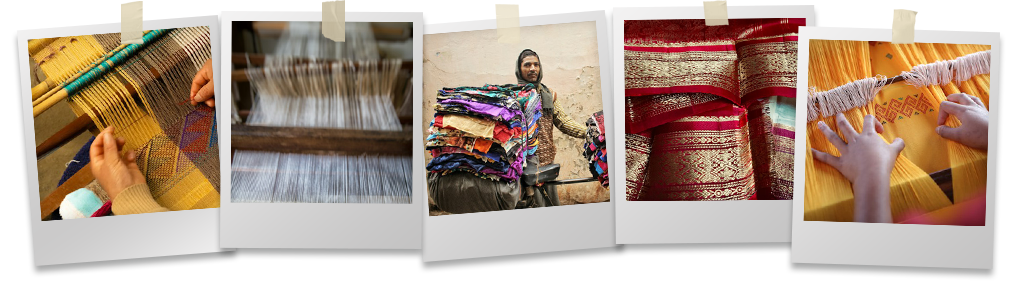
And that is something I want our guests to understand.
A sari is not just a shopping experience
This is one of the reasons I don’t like craft visits to become simply:
“Here is the shop. Here is the price. Would you like to buy something?”
That misses the point.
When we meet artisans, I want travellers to ask questions.
How long have you been weaving?
Who taught you?
Which designs are traditional?
What has changed?
What is becoming difficult?
What happens when demand changes?
What does the next generation want to do?
Suddenly the sari becomes something much more meaningful.
You are no longer looking at a beautiful object.
You are looking at a living cultural practice.
And perhaps you also begin to understand why handmade textiles cannot always be compared with mass-produced fabric simply on price.
The price represents material.
But it also represents time, skill, knowledge and human attention.
This is how I want to travel through India
When we design our journeys around textiles and craft, I want the landscape to be part of the story too.
In Varanasi, we can talk about silk.
In Rajasthan, block printing and textiles lead us into different communities and landscapes.
In Himachal, wool and weaving connect directly with mountain life.
In South India, temple traditions, bronze casting, textiles and classical arts reveal another cultural world.
The object is never isolated from the place that produced it.
That is the journey I want to create.
Not shopping.
Not souvenir hunting.
But meeting the people who keep India’s traditions alive.
And if, at the end of the journey, you take a Banarasi sari home, I hope you take something else with it:
