

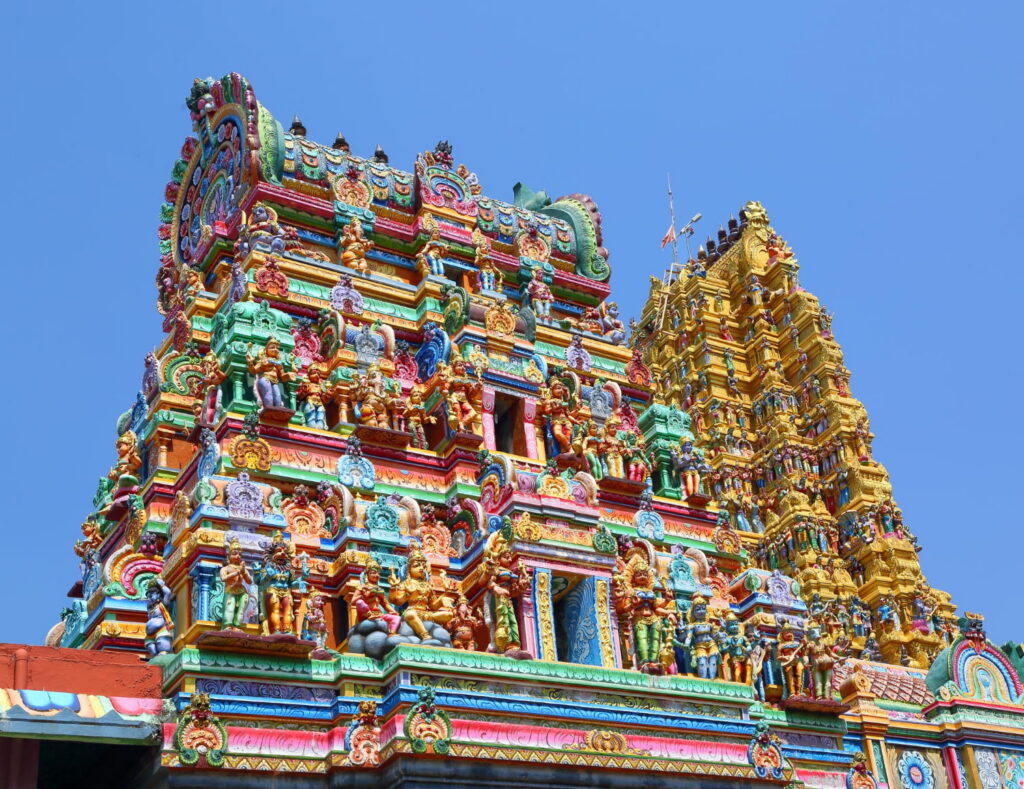
If you look only at the architecture, you see the past. If you stay long enough, you begin to see the present.
The first time you stand in front of Brihadisvara Temple at Thanjavur, the scale can be difficult to comprehend.
The towering vimana.
The enormous stone surfaces.
The sculptures.
The mandapas.
The courtyards.
The extraordinary precision.
You may find yourself wondering:
How did people build something like this more than a thousand years ago?
And that is certainly one of the questions worth asking.
But it is not the only one.
Because South Indian temples are not simply monuments left behind by another civilisation.
Many are still functioning religious and cultural spaces.
UNESCO describes the Great Living Chola Temples—Brihadisvara at Thanjavur, Brihadisvara at Gangaikondacholapuram and Airavatesvara at Darasuram—as “living temples,” where traditions of worship and ritual established more than a thousand years ago continue daily, weekly and annually as part of community life.
That changes everything.
A temple is architecture—but also much more
When we look carefully, a South Indian temple reveals multiple layers.
Architecture.
Sculpture.
Mythology.
Engineering.
Political history.
Patronage.
Music.
Dance.
Ritual.
Craft.
Community.
Food.
Festivals.
And memory.
The temple is not an isolated building.
Historically, these complexes were deeply connected to the towns and societies around them. UNESCO notes that the Chola temples demonstrate achievements in architecture, sculpture, painting and bronze casting, while their ritual traditions continue to form part of community life.
This is why I don’t like the phrase “temple tour” when we talk about South India.
It sounds as though we are simply moving from one monument to another.
I want to slow it down.
Stand in the courtyard.
Look at the stone.
Notice the shadows.
Look carefully at a sculpture rather than photographing an entire wall.
Understand what the figures represent.
Ask why the temple was built here.
Who commissioned it?
How was it funded?
How did the surrounding settlement develop?
What happens here today?
And then step outside.
Look at the street.
The flower sellers.
The bronze artisans.
The musicians.
The food.
The pilgrims.
The local shops.
The festivals.
The people who live around the temple.
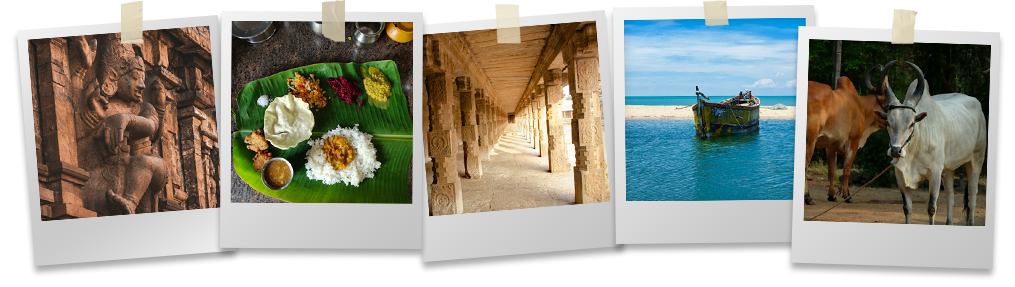
Suddenly the temple is no longer an isolated monument.
It becomes the centre of a living cultural landscape.
This is why I love travelling through Tamil Nadu
A journey through Chennai, Mahabalipuram, Thanjavur, Madurai and the Chettinad region allows us to see very different layers of South India.
At Mahabalipuram, we encounter extraordinary rock-cut and structural architecture.
At Thanjavur, the Chola world becomes monumental.
In Madurai, the temple remains deeply connected with the life of the city.
In Chettinad, architecture takes us into another story—merchant wealth, migration, materials, craftsmanship and extraordinary domestic spaces.
And between these places, there is food, landscape, craft, music, textiles and everyday life.
That is the kind of journey I want to create.
Not a checklist of temples.
A journey through the cultural world that created them—and continues to live around them.
Because when you travel this way, something interesting happens.
You stop asking:
“How old is this temple?”
And you start asking:
“How is this temple still alive?”
For me, that is the difference between seeing heritage and experiencing it.
And perhaps that is also the difference between visiting India and beginning to understand it
