

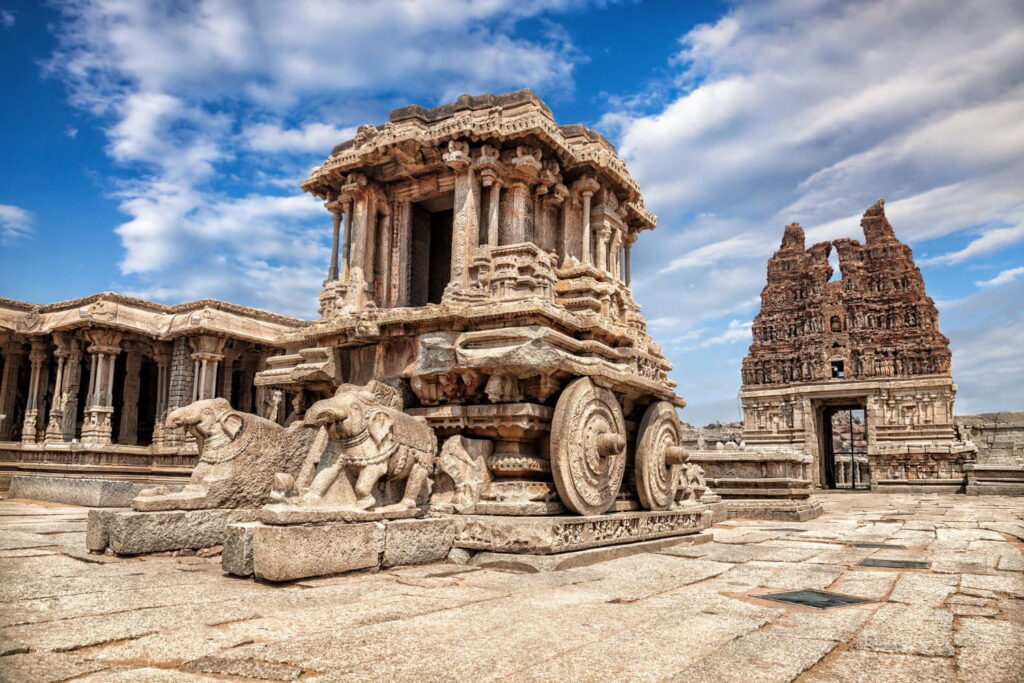
Imagine a city so wealthy and powerful that travellers described it as one of the most beautiful cities they had ever seen.
Then imagine it being attacked, devastated and largely abandoned.
And centuries later, you are walking through its ruins.
This is Hampi.
And every time I visit, I find myself asking the same question:
**How can a city this extraordinary have disappeared so completely?**
Today, Hampi is one of India’s most remarkable heritage destinations and a UNESCO World Heritage Site.
But the ruins can sometimes make it difficult to imagine what stood here before.
The landscape is filled with enormous granite boulders, temples, gateways, mandapas, old roads, water structures and fragments of walls.
It can feel almost empty.
But this was once a major capital.
Hampi was not simply a collection of temples
The Group of Monuments at Hampi represents the remains of Vijayanagara, a major South Indian empire that flourished from the 14th to the 16th centuries.
UNESCO describes the site as the former capital of the Vijayanagara Empire, with more than 1,600 surviving remains—including sacred and royal complexes, fortifications, bazaars, water structures, gateways, stables and other elements of an extensive urban system.
That number—**more than 1,600 surviving remains**—is important.
Because when people say “Hampi,” they often imagine one temple.
Perhaps the Virupaksha Temple.
Or the famous stone chariot at the Vittala Temple.
But Hampi was a **city**.
A functioning urban landscape.
There were markets.
Residential areas.
Royal spaces.
Sacred spaces.
Water systems.
Defensive structures.
Roads.
Agricultural areas.
And an extraordinary relationship between architecture and the surrounding landscape.
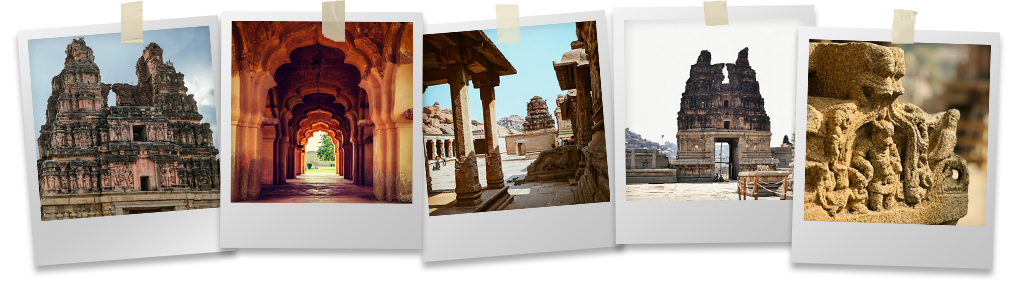
Look at the boulders
One of the things I love most about Hampi is that the landscape itself feels like part of the architecture.
The granite hills and boulder formations are not simply a backdrop.
The city was planned around them.
UNESCO specifically recognises the remarkable integration of Hampi’s planned and defended city with its temple architecture and spectacular natural setting.
This is one of those places where I encourage travellers to stop photographing for a moment.
Look.
Really look.
Where does the natural rock end?
Where does architecture begin?
How were pathways created?
How were defensive walls positioned?
How did the river influence settlement?
How was water managed?
You begin to realise that the city was not imposed on the landscape.
**It worked with the landscape.**
And then came 1565
The Battle of Talikota in 1565 marked a devastating turning point.
The Vijayanagara kingdom was defeated by a confederacy of Deccan Sultanates, and Hampi was extensively pillaged and destroyed.
The physical destruction was so extensive that the city never returned to its former metropolitan scale.
UNESCO describes the destruction following Talikota as a defining part of Hampi’s historical significance.
And this is where the word “forgotten” becomes interesting.
Hampi wasn’t forgotten because it was insignificant.
Quite the opposite.
It was forgotten because **its urban life disappeared.**
The buildings remained.
The landscape remained.
The temples remained.
But the city that had once animated them was gone.
Yet Hampi isn’t completely dead
This is something I particularly want travellers to understand.
The ruins are not simply archaeological objects.
Virupaksha Temple remains in worship.
Festivals continue.
Pilgrims come.
Agriculture continues in parts of the landscape.
Traditional skills and local livelihoods remain.
UNESCO notes that religious rituals, festivals, pilgrimage and other traditions continue at the site, even as modern uses and tourism create pressures around the historic remains.
So Hampi sits somewhere between **ruin and living heritage**.
And that tension is fascinating.
Why I think Hampi deserves slow travel
If you visit Hampi in a hurry, you will see monuments.
If you stay longer, you begin to see a city.
That difference matters.
I would rather spend time understanding how the sacred and royal areas were organised than rush through ten monuments.
I would rather sit quietly in the landscape than spend the entire afternoon chasing photographs.
I would rather talk about water management, trade, architecture and urban planning than simply memorise the names of temples.
Because Hampi tells us something important about cities:
**Cities are more than their buildings.**
They depend on people.
Economies.
Water.
Trade.
Politics.
Belief.
Movement.
And when those systems disappear, even the greatest city can become a ruin.
Perhaps that is why Hampi continues to fascinate me.
It isn’t only a story about a magnificent empire.
It is a reminder of how temporary even the greatest cities can be.
And when we walk through Hampi with that thought in mind, the stones begin to feel less like ruins.
**They begin to feel like memories of a city.**
That is how I want to take you through Hampi.
Not simply to see the ruins.
But to imagine the city that once stood here.
