
You don’t have to look very far to see that Kochi has always been a meeting place.
When I take guests through Kochi, one of the things I find most fascinating is that the city doesn’t look as though it belongs entirely to one culture.
And that is precisely the point.
Look closely and you begin to see Kerala, China, Portugal, the Netherlands, the Arab world, Jewish heritage and later British influences—all sitting within the same cultural landscape.
**Kochi is not simply a historic city. It is a city shaped by exchange.**
For centuries, the Malabar Coast was connected to international maritime trade. Kerala’s spice routes brought traders and travellers from different parts of Asia, the Middle East and Europe. Kerala Tourism’s account of the historic Spice Route notes that traders from dozens of countries participated in the spice trade with the region.
And you can still see the evidence.
You can taste it.
You can hear it.
You can see it in the architecture.
You can even find it in the language.
Start with Fort Kochi
Fort Kochi is perhaps one of the best places in India to understand what cultural exchange looks like when it becomes part of everyday life.
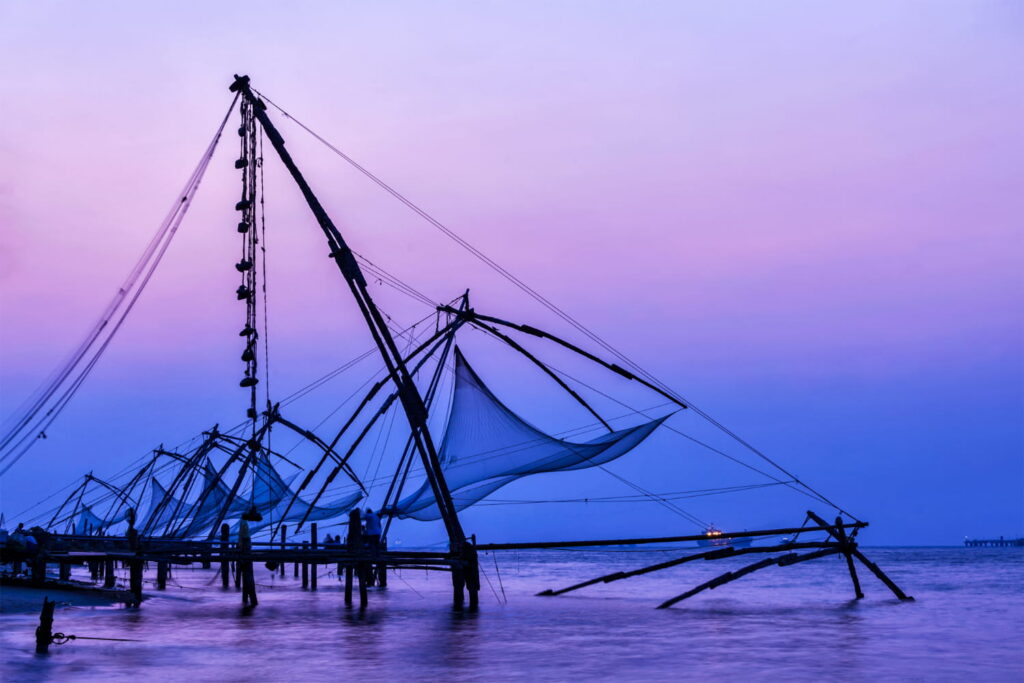
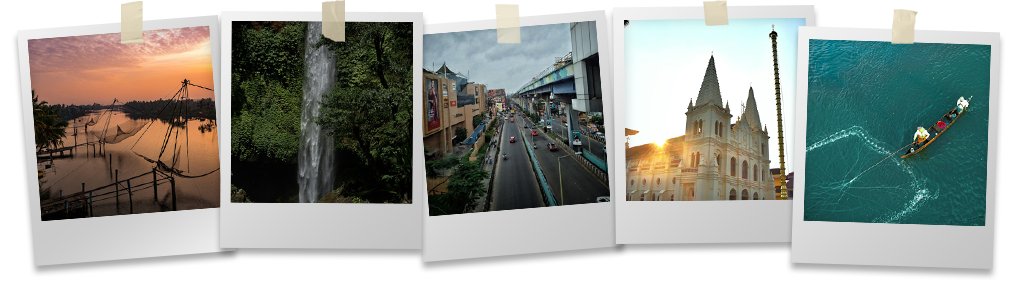
Walk through its streets and you encounter churches, old European buildings, Kerala houses, warehouses, cafés, Jewish heritage, markets and the famous Chinese fishing nets.
The Portuguese arrived in the region in the late 15th and early 16th centuries and left a strong architectural and cultural imprint. Kerala Tourism notes Portuguese influences in churches, houses, streets, language and cuisine.
Then came the Dutch.
The Dutch took Kochi from the Portuguese in 1663 and substantially reshaped parts of Fort Kochi. Buildings such as the Bastion Bungalow show an interesting blending of European and Kerala architectural characteristics.
And this is where I find the city particularly interesting.
Because the result is not simply **European architecture in India**.
It is something more complicated.
Something evolved.
A European building adapts to a tropical climate.
A local material is used within a foreign architectural vocabulary.
A Christian church becomes part of a Kerala neighbourhood.
A spice brought into the port becomes part of a global trading economy.
Food changes.
Language changes.
Architecture changes.
And eventually, these influences stop feeling foreign.
They become **Kochi**.
Cultural exchange is not the same as cultural replacement
This is an important distinction when travelling through historic cities.
We often talk about colonial architecture as though one culture arrived and simply imposed itself on another.
The history is more complicated.
Cultures meet.
They negotiate.
They adapt.
They borrow.
They resist.
They transform.
And architecture is often one of the best places to see this process.
That is why I don’t want our guests to simply photograph a Portuguese church or a Dutch building.
I want them to ask:
**What happened when these cultures met?**
What materials were used?
Who built the building?
Who lived there?
How did the climate influence its design?
What remained local?
What changed?
And what survives today?
Then there is Mattancherry
Move towards Mattancherry and the story becomes even richer.
Jewish heritage, spice warehouses, markets, temples, mosques, old homes and trading communities exist within a relatively compact landscape.
The history of Kochi is essentially a history of people moving.
Goods moving.
Ideas moving.
Religions moving.
Languages moving.
And eventually, identities becoming intertwined.
This is why Kochi is such an interesting destination for travellers interested in **architecture, art, food and culture**.
You don’t need to be a historian to appreciate it.
You simply need to slow down.
This is how I like to travel
When I design a journey through Kochi, I don’t want to create a checklist of Fort Kochi’s “top attractions.”
I want to create connections.
Architecture leads us to trade.
Trade leads us to spices.
Spices lead us to migration.
Migration leads us to communities.
Communities lead us to food, language, religion and everyday life.
Suddenly, a street is no longer just a street.
**It becomes evidence of history.**
And perhaps that is the greatest lesson Kochi offers us.
Cultural exchange does not always happen in museums.
Sometimes it happens in kitchens.
In markets.
In buildings.
In languages.
In food.
In the streets where people continue to live.
**That is the Kochi I want our travellers to experience.**
Not simply a colonial city.
Not simply a port.
But a place where the world has been meeting India for centuries.
**WalkAroundIndia — India, read differently.**
